All NDIS Changes in 2026 | Complete Guide for Participants & Providers
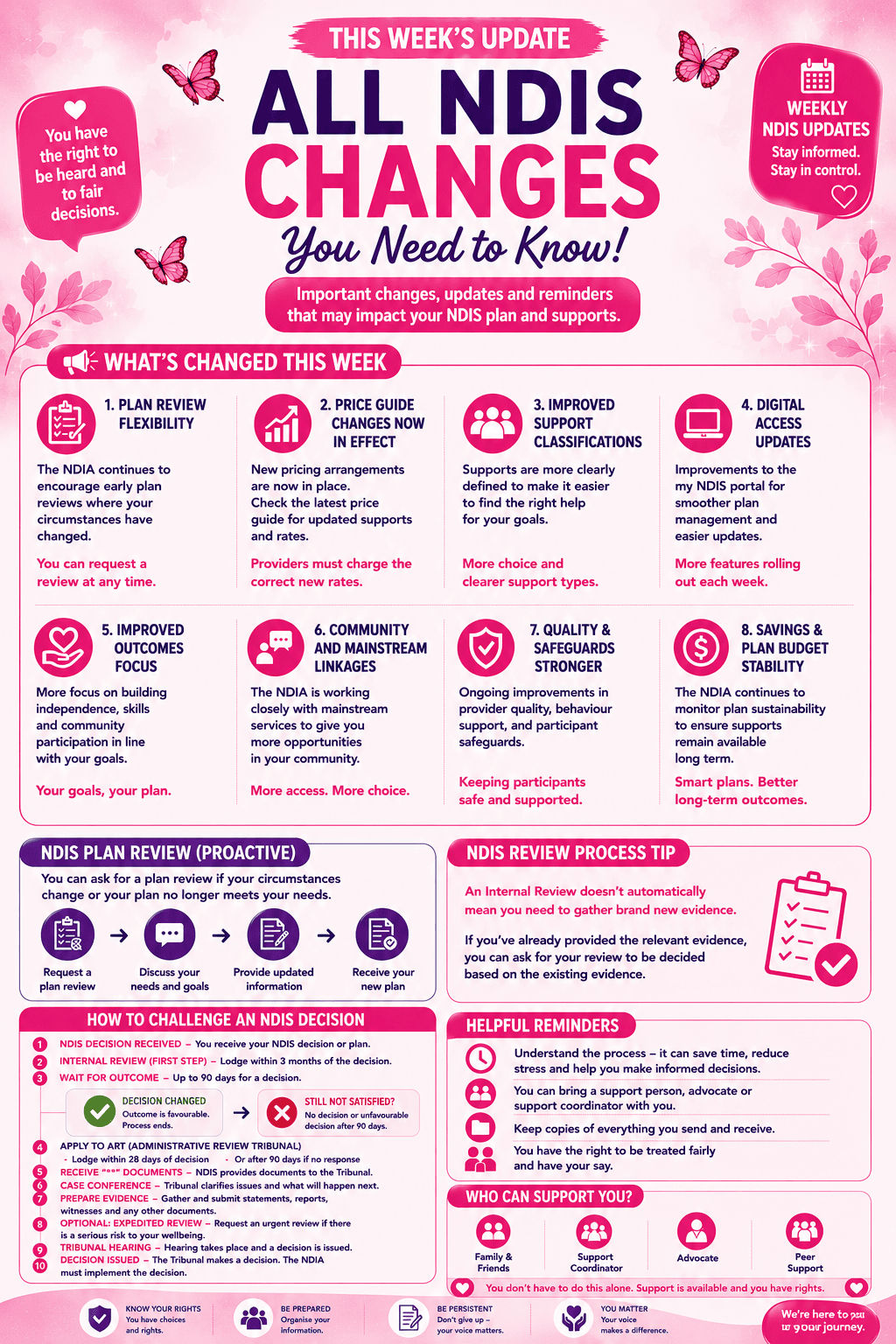
What’s Changed in the NDIS?
The latest NDIS updates focus on:
- Greater flexibility in plan reviews
- Updated Pricing Arrangements and Price Guide
- Improved support classifications
- Better digital services
- Stronger focus on participant outcomes
- Increased community inclusion
- Higher provider quality standards
- Long-term budget sustainability
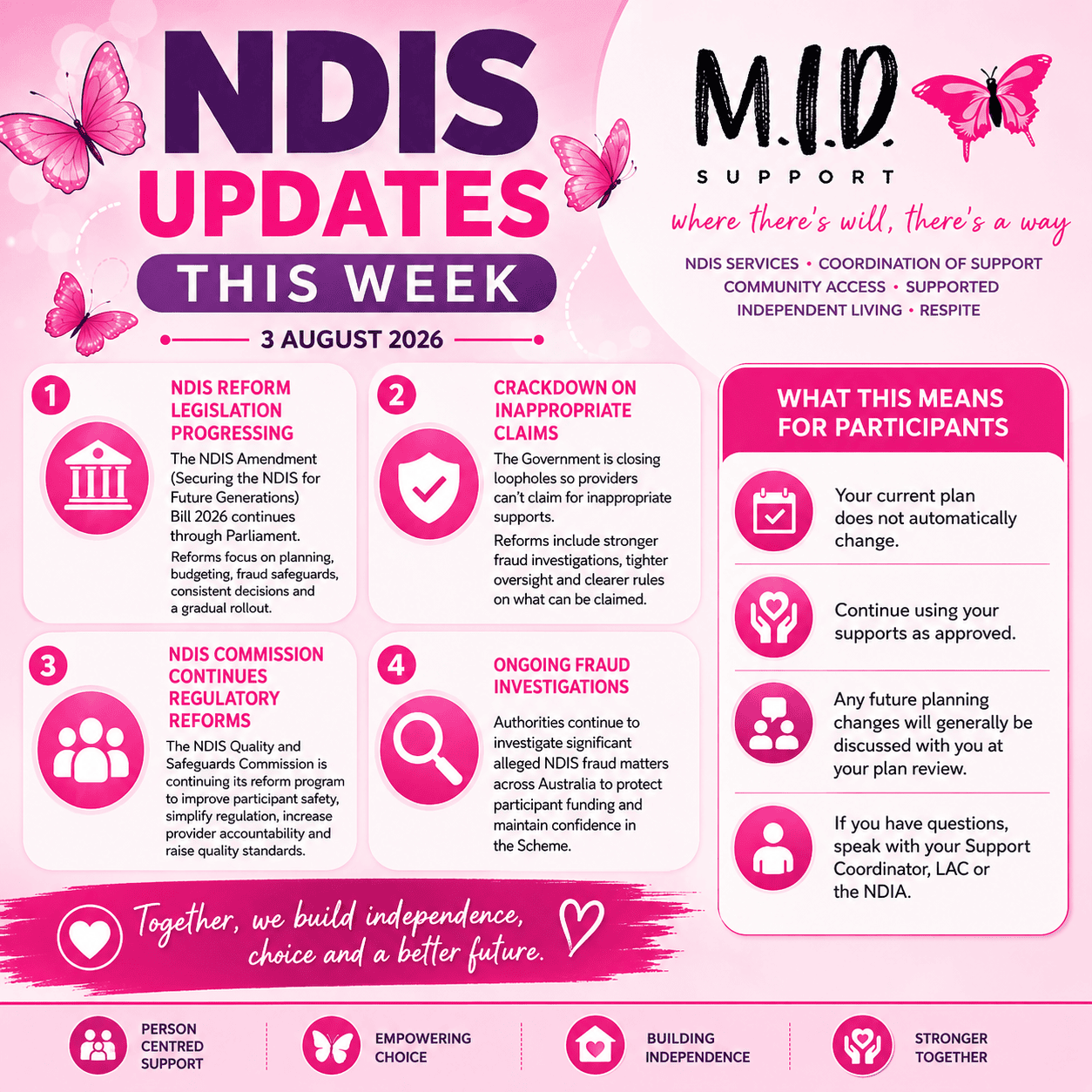
These reforms aim to create a more participant-centred NDIS while improving consistency and protecting the Scheme for future generations.
1. Greater Flexibility for NDIS Plan Reviews
One of the most positive changes is that participants continue to have the ability to request a plan review when circumstances change.
Examples include:
- Your disability or support needs change
- Your current funding is no longer enough
- Your living arrangements change
- You require additional therapies
- Your goals have changed
You don’t have to wait until your current plan expires if your situation has significantly changed.
What this means
Participants can seek funding that better reflects their current needs rather than waiting months for scheduled reviews.
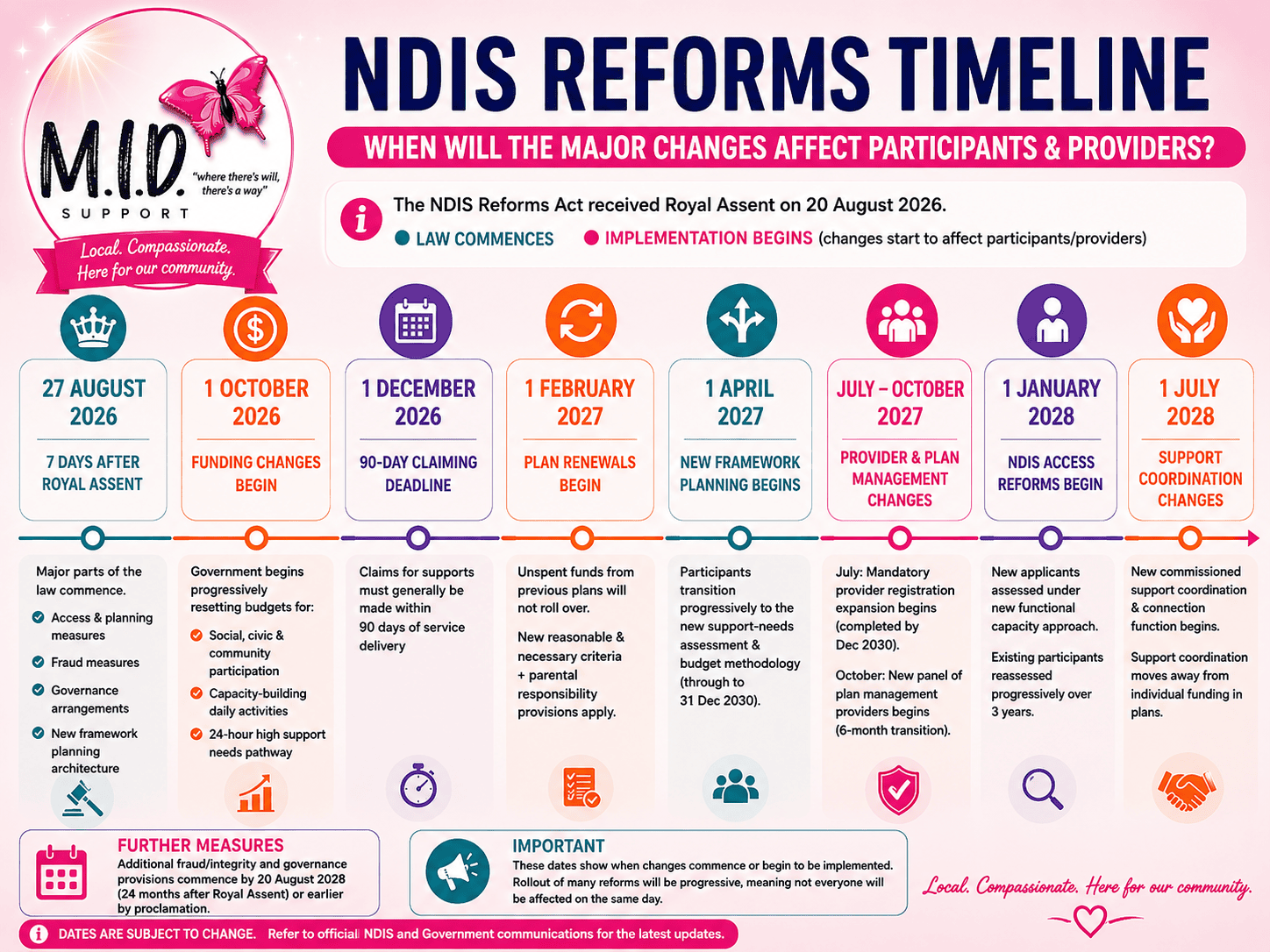
2. New NDIS Pricing Arrangements Are Now in Effect
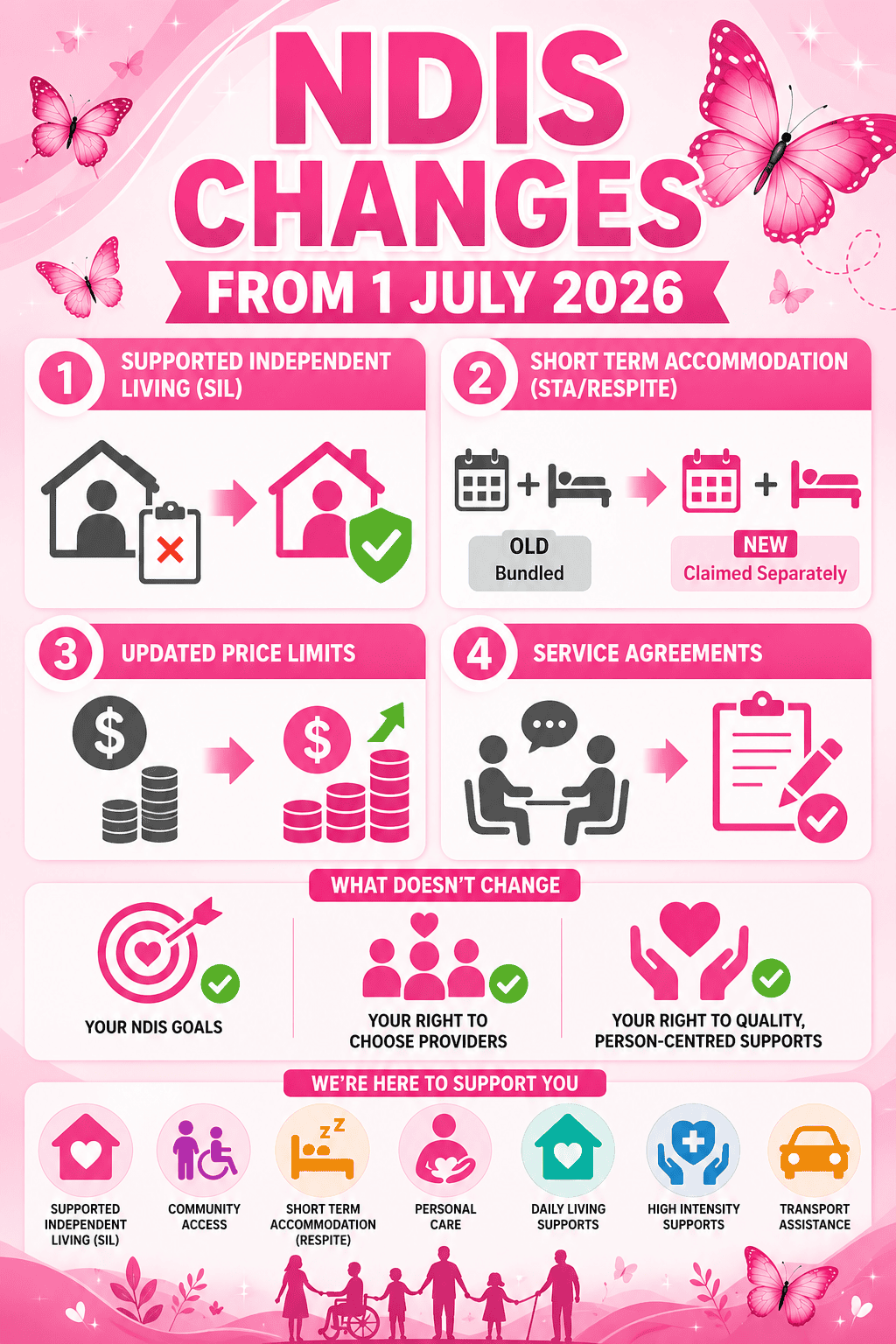
The 2026–27 NDIS Pricing Arrangements came into effect from 1 July 2026.
These updates include:
- New maximum price limits
- Updated support item pricing
- Changes to claiming requirements for some supports
- Providers must use the current pricing schedule
- Existing service agreements should be reviewed with participants before pricing changes are applied.
For Participants
You should:
- Review your service agreements
- Speak with your providers if pricing changes affect your supports
- Understand how your funding may be used under the updated pricing arrangements
For Providers
Providers should:
- Ensure all invoices comply with current pricing limits
- Update internal billing systems
- Communicate pricing changes clearly with participants
3. Improved Support Classifications
The NDIS is continuing to make support categories clearer and easier to understand.
The goal is to:
- Reduce confusion
- Improve consistency
- Help participants find the right supports
- Make funding easier to understand
This creates greater clarity for participants, providers and support coordinators alike.
4. Digital Access Improvements
The my NDIS portal continues to receive improvements designed to make managing plans easier.
Recent improvements focus on:
- Better navigation
- Easier access to participant information
- Improved communication
- Faster updates
- Simplified plan management
The NDIA has indicated further digital improvements will continue rolling out over time.
5. Greater Focus on Participant Outcomes
Rather than simply funding supports, the NDIS continues shifting toward supporting meaningful outcomes.
This includes encouraging:
- Greater independence
- Skill development
- Community participation
- Employment opportunities
- Increased confidence
- Personal choice
The emphasis is on helping participants achieve the goals that matter most to them.
6. Stronger Community and Mainstream Connections
The NDIA continues encouraging stronger links between NDIS supports and mainstream community services.
This means participants may have greater opportunities to access:
- Local community groups
- Sporting clubs
- Education
- Recreation
- Employment pathways
- Social participation
The overall aim is greater inclusion and increased choice.
7. Stronger Quality and Safeguards
Participant safety remains a major focus.
The NDIS Quality and Safeguards Commission continues strengthening:
- Provider accountability
- Participant rights
- Worker standards
- Complaint handling
- Safeguards
- Service quality
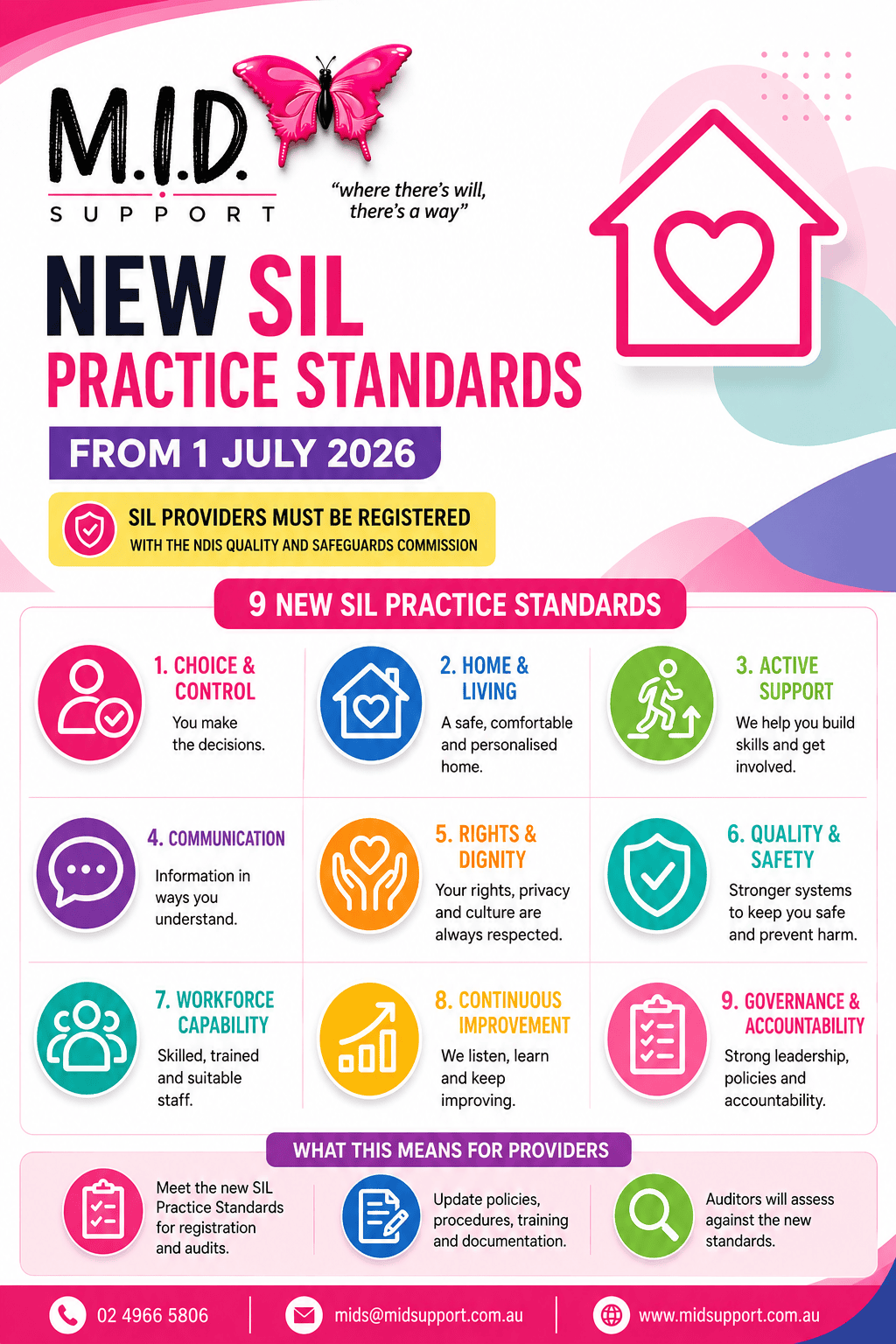
For Supported Independent Living (SIL), new Practice Standards introduced from 1 July 2026 place additional emphasis on participant choice, active support, communication, dignity and quality of home environments.
8. Smarter Budget Management
The NDIA continues monitoring plan sustainability to help ensure funding remains available for current and future participants.
This includes:
- Better funding oversight
- Sustainable budgeting
- Improved planning consistency
- Appropriate use of supports
The aim is to balance participant needs with the long-term sustainability of the Scheme.
Understanding the NDIS Plan Review Process
If your circumstances change, you may request a plan review.
A typical review process includes:
- Request a review.
- Discuss your current supports and goals.
- Provide updated reports or evidence if needed.
- The NDIA considers your information.
- Receive your updated plan.
Keeping recent reports from therapists, specialists or treating professionals can help support your review request.
Internal Review Tip
Many people don’t realise that an Internal Review doesn’t always require completely new evidence.
If you’ve already supplied relevant documentation, the NDIA may be able to make a decision using the information already available, depending on your circumstances and the issues under review.
How to Challenge an NDIS Decision
If you disagree with an NDIS decision, there are review pathways available.
Generally, the process includes:
Step 1
Receive your NDIS decision.
Step 2
Request an Internal Review.
This usually needs to occur within the required review timeframe.
Step 3
Await the review outcome.
Step 4
If you’re still dissatisfied, you may have further external review options available under applicable legislation.
Seeking advice from an advocate or support coordinator can help you understand your options.
Helpful Reminders for Participants
Remember that you have the right to:
- Ask questions
- Understand your plan
- Request reviews when appropriate
- Bring a support person to meetings
- Keep copies of important documents
- Be treated fairly and respectfully
- Have your voice heard
Being organised and informed can make navigating the NDIS much easier.
Who Can Support You?
You don’t have to navigate the NDIS alone.
Support may be available from:
- Family members
- Friends
- Support Coordinators
- Advocates
- Peer Support Groups
- Disability organisations
- Registered NDIS providers
The right support network can help you better understand your plan and make the most of your funding.
Key Takeaways
The 2026 NDIS changes are focused on improving participant experiences while strengthening the quality, safety and sustainability of the Scheme.
The biggest themes include:
- More flexible plan reviews
- Updated pricing arrangements
- Clearer support categories
- Better digital services
- Stronger participant rights
- Improved provider quality standards
- Greater community inclusion
- Long-term sustainability
Staying informed will help you understand your rights, access the supports you need and make confident decisions about your NDIS journey.
Frequently Asked Questions (FAQ)
What is the biggest NDIS change in 2026?
Some of the most significant updates include the new 2026–27 Pricing Arrangements, strengthened Supported Independent Living (SIL) Practice Standards, improvements to digital services and continued reforms to participant planning and provider quality.
Can I ask for an NDIS plan review at any time?
If your circumstances or support needs change, you can request a review rather than waiting for your current plan to end.
Have NDIS prices changed?
Yes. Updated pricing arrangements took effect from 1 July 2026, and providers should use the current pricing schedule.
What are the new SIL Practice Standards?
The updated SIL standards place greater emphasis on participant choice and control, active support, communication, safe and personalised homes, dignity, rights and quality service delivery.