Understanding NDIS Practice Standards for Registered Providers
Understanding the NDIS Practice Standards for Registered Providers
Providing NDIS supports is about much more than delivering a service. Registered NDIS providers have responsibilities to ensure participants receive safe, respectful and high-quality supports that promote choice, control, dignity and inclusion.
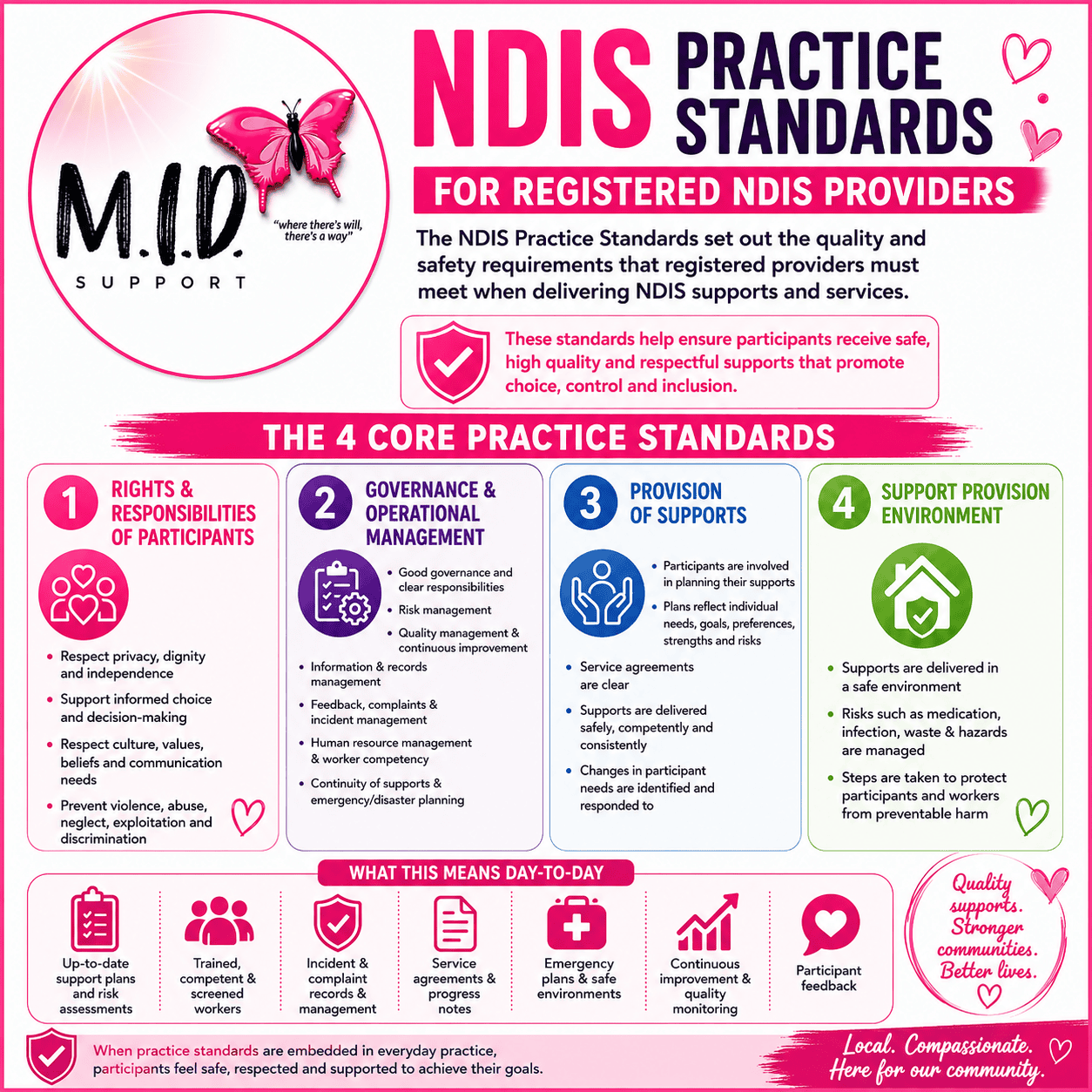
The NDIS Practice Standards and Quality Indicators provide the framework registered providers are assessed against. They help providers understand what quality service delivery should look like and what evidence may be required during an audit.
💗 The 4 Core NDIS Practice Standards
1. Rights & Responsibilities of Participants
Participants should always be at the centre of their supports.
Providers should respect each participant’s:
- Privacy and dignity
- Independence
- Culture and values
- Individual communication needs
- Right to make informed decisions
- Choice and control over their supports
Providers must also take appropriate steps to prevent abuse, neglect, exploitation and discrimination.
The goal is to ensure participants feel safe, respected and genuinely involved in decisions about their lives and supports.
2. Governance & Operational Management
Quality NDIS supports require strong systems behind the service.
Registered providers need appropriate processes covering areas such as:
- Governance
- Risk management
- Quality management
- Record keeping
- Complaints management
- Incident management
- Workforce management
- Continuity of supports
Providers should also have appropriate emergency and disaster management arrangements so essential supports can continue wherever reasonably possible.
Good governance isn’t only about having policies in place. Providers need to demonstrate that their systems are understood and implemented in everyday practice.
3. Provision of Supports
NDIS supports should be planned with the participant, not simply for them.
Support planning should consider each person’s:
- Goals
- Individual needs
- Preferences
- Strengths
- Identified risks
- Communication requirements
Service agreements should be clear, and workers should understand how supports are expected to be delivered safely and consistently.
Providers should also have processes for recognising and responding when a participant’s needs, circumstances or risks change.
4. Support Provision Environment
Participants have the right to receive their supports in environments that are as safe and appropriate as possible.
Depending on the supports being delivered, providers may need systems covering areas such as:
- Infection prevention and control
- Medication management
- Waste management
- Workplace and environmental hazards
- Participant safety
- Preventing avoidable harm
These processes should be appropriate to the type of supports being provided and the individual needs of participants.
📝 What Does NDIS Compliance Look Like Day-to-Day?
For registered providers, meeting the NDIS Practice Standards needs to be reflected in everyday service delivery—not just in policies prepared for an audit.
Evidence of compliance may include:
✔️ Current participant support plans and risk assessments
✔️ Clear and current service agreements
✔️ Accurate progress notes and participant records
✔️ Appropriately trained and competent workers
✔️ Worker screening and employment records
✔️ Incident and complaint management records
✔️ Medication documentation where applicable
✔️ Emergency and disaster management plans
✔️ Participant feedback
✔️ Continuous improvement and quality-management records
The important part is ensuring that policies, procedures and records reflect what is actually happening within the organisation.
Additional NDIS Practice Standards
The four core modules don’t necessarily cover every requirement that applies to a registered NDIS provider.
Depending on the supports and services being delivered, providers may also need to meet additional or supplementary Practice Standards.
These can relate to areas such as:
- High-intensity daily personal activities
- Specialist behaviour support
- Implementing behaviour support plans
- Early childhood supports
- Specialist Disability Accommodation (SDA)
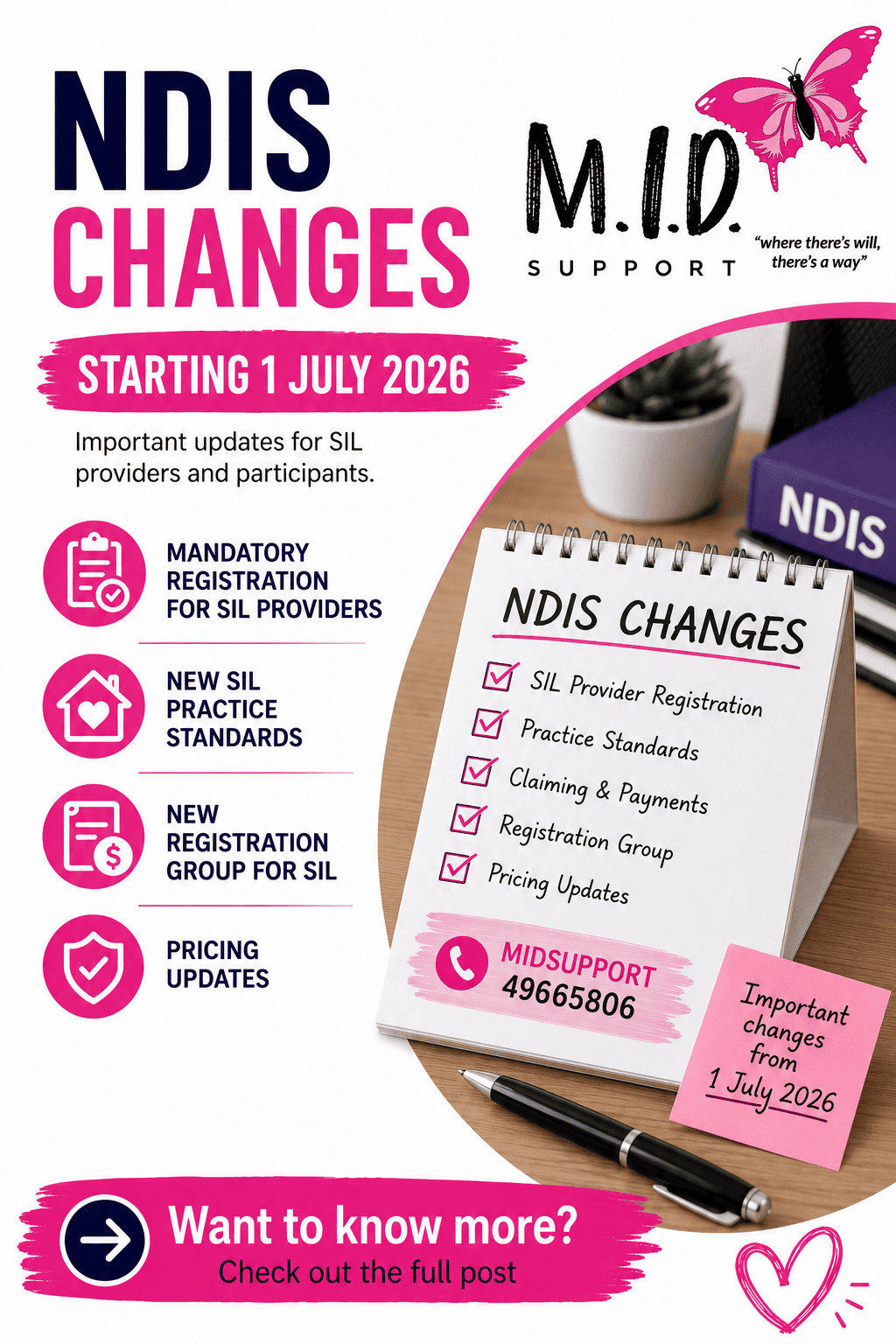
- Supported Independent Living (SIL)
Providers should understand which registration groups and Practice Standards apply specifically to their organisation.
🌟 Why Do the NDIS Practice Standards Matter?
The NDIS Practice Standards aren’t simply about passing an audit.
When implemented properly, they help create services where participants are heard, respected, protected and genuinely involved in decisions about their lives.
Good compliance should be visible in everyday practice—from the way workers communicate with participants to how incidents are handled, risks are managed and participant feedback is used to improve services.
Ultimately, strong systems support better outcomes for participants while helping providers maintain safe, consistent and high-quality services.
Quality Supports. Stronger Communities. Better Lives.
For the official requirements and most current Quality Indicators, registered providers should always refer directly to the NDIS Quality and Safeguards Commission’s NDIS Practice Standards and Quality Indicators.
This article provides general information only and should not be considered legal, compliance or professional advice. NDIS requirements can change, so providers should confirm their obligations using current NDIS Commission guidance.